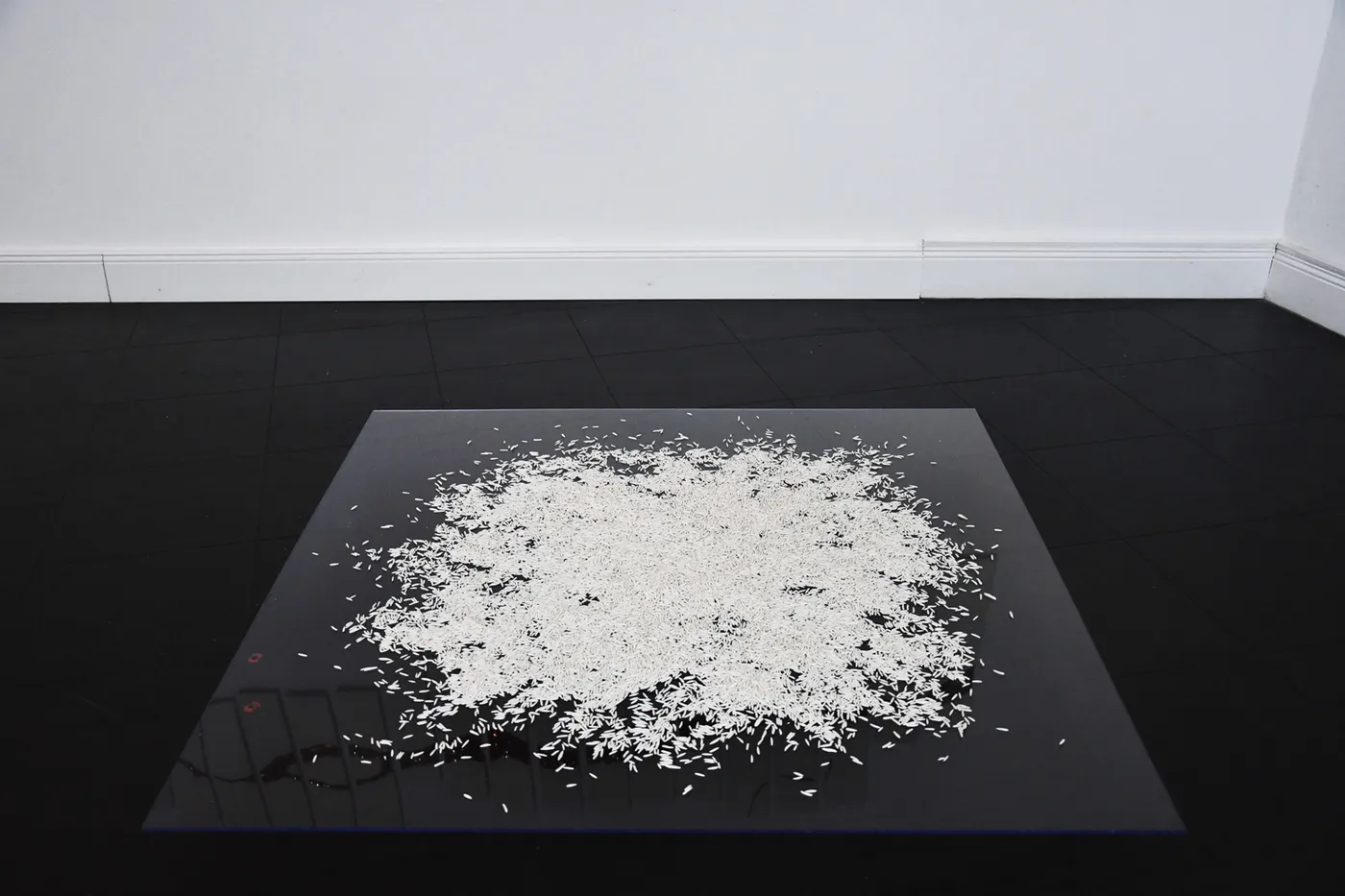
"itai itai" (2026)
“Itai itai” (Japanese) means something like “ouch ouch” and refers to the cadmium epidemic of the same name in Japan in the 20th century.
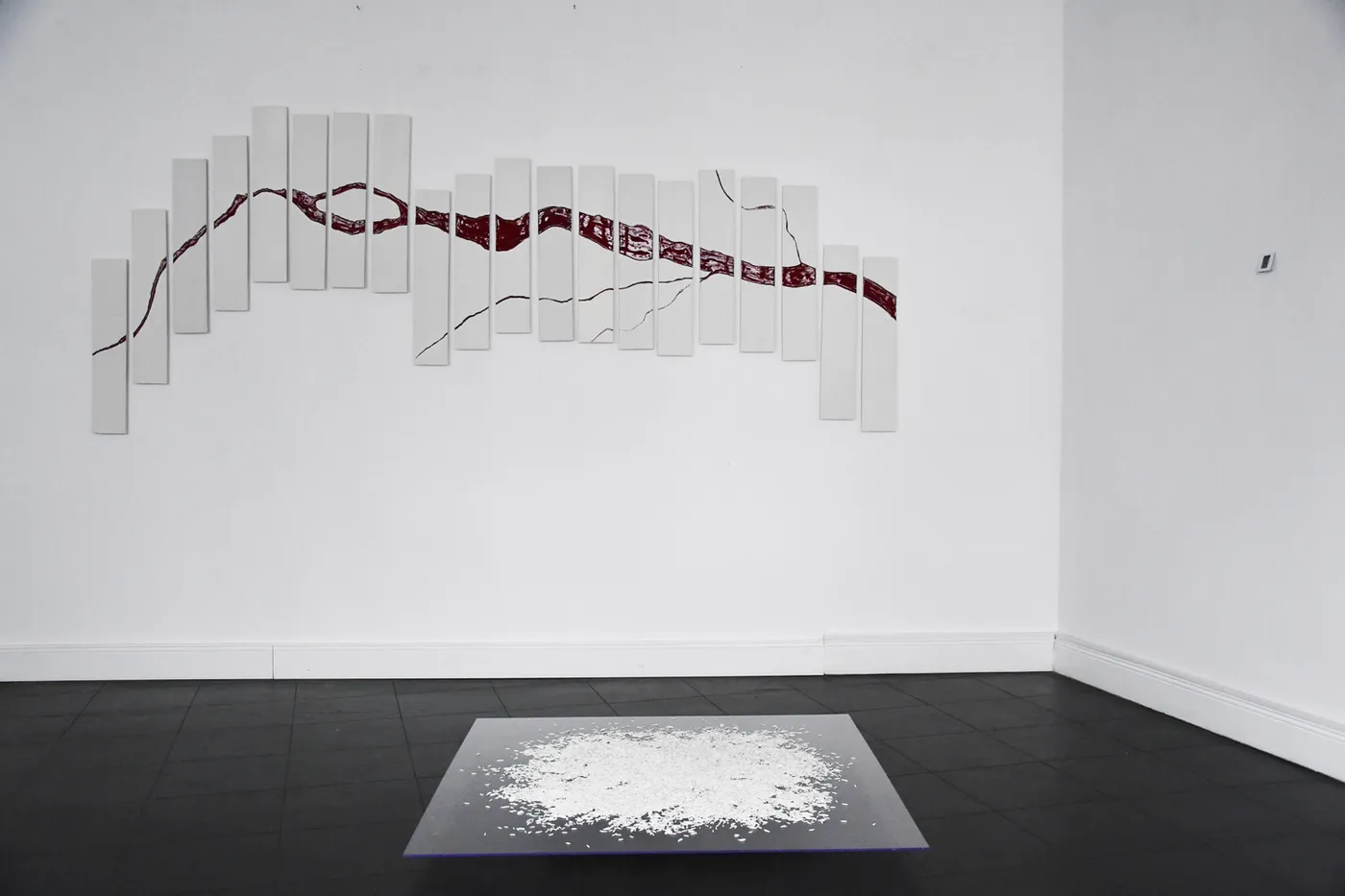
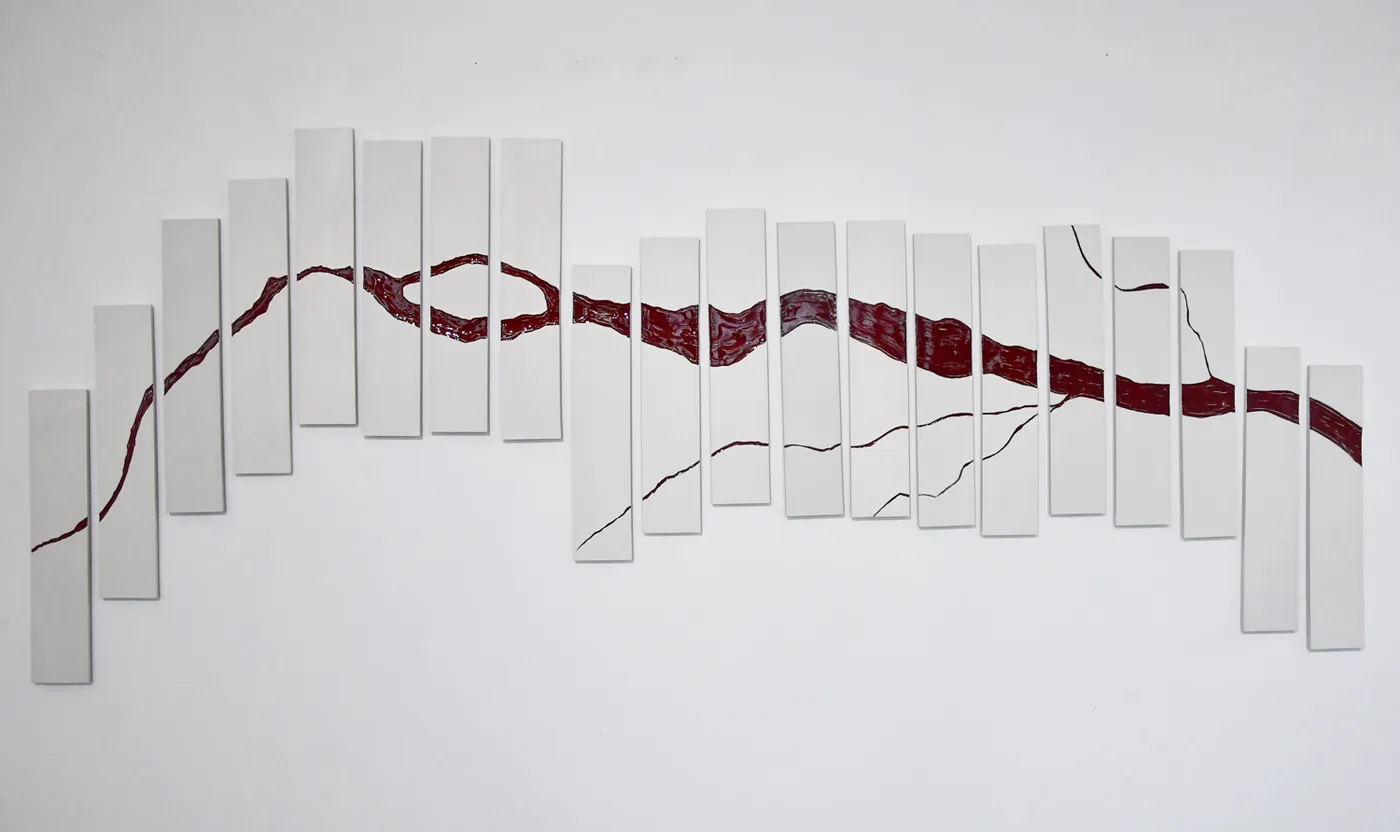
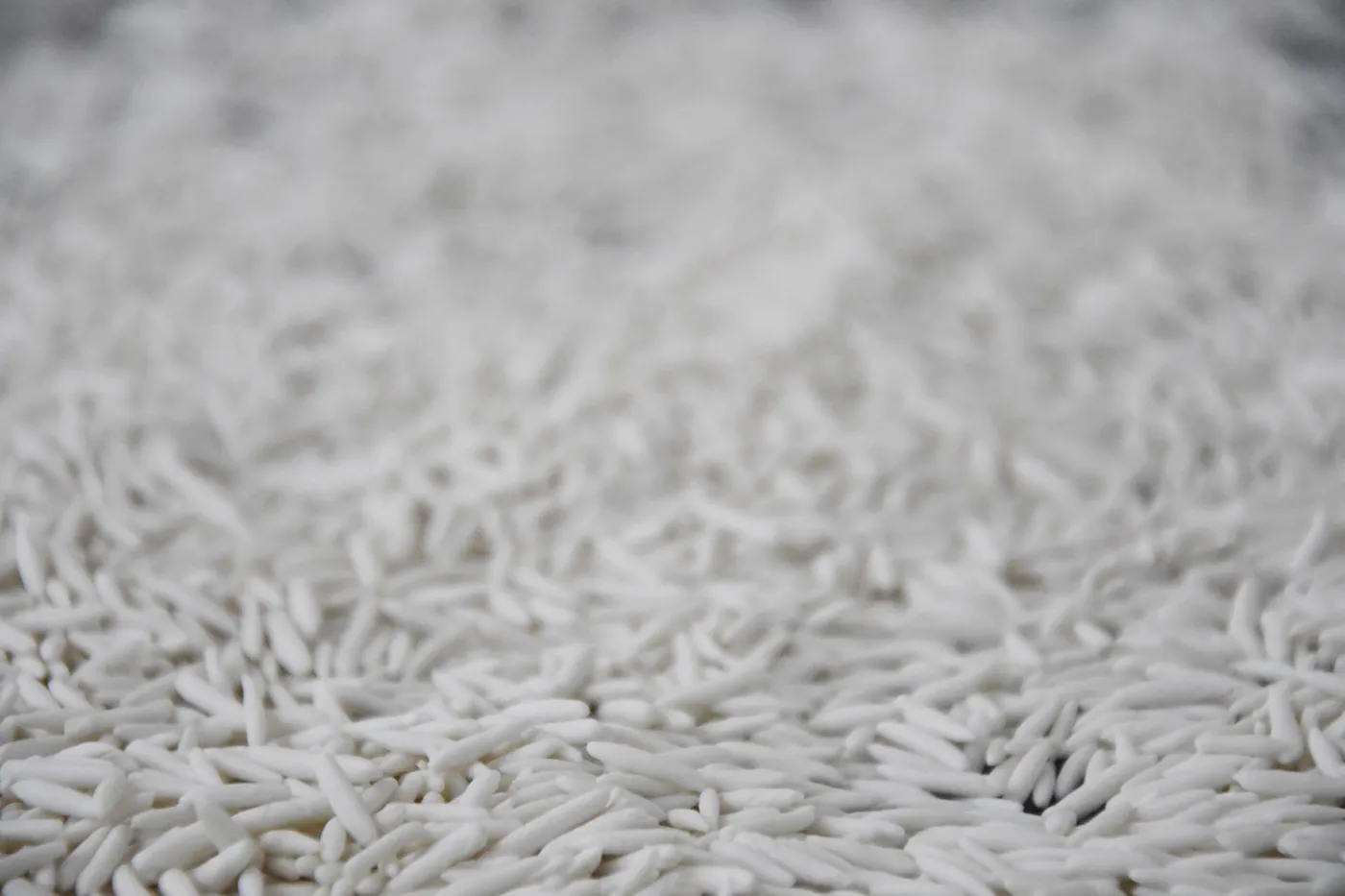
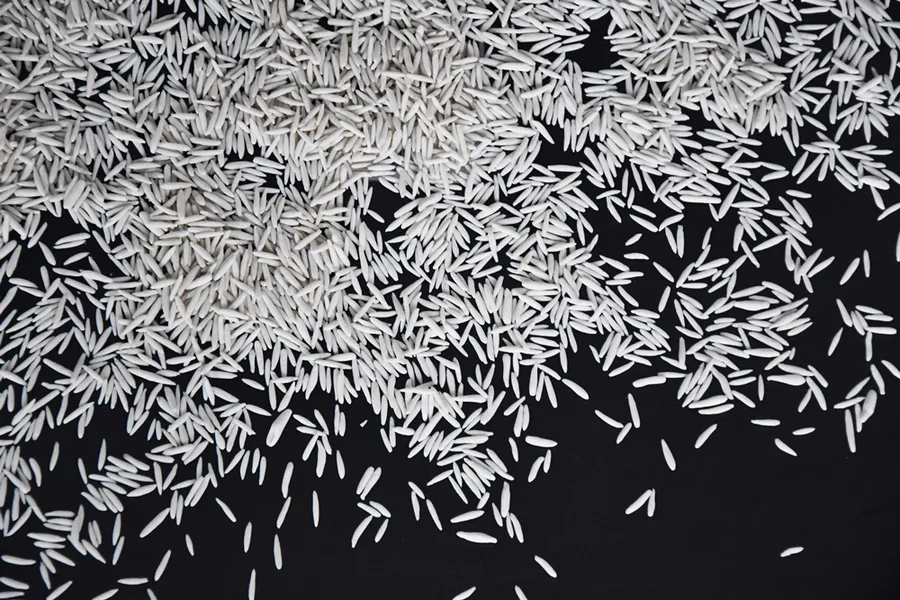
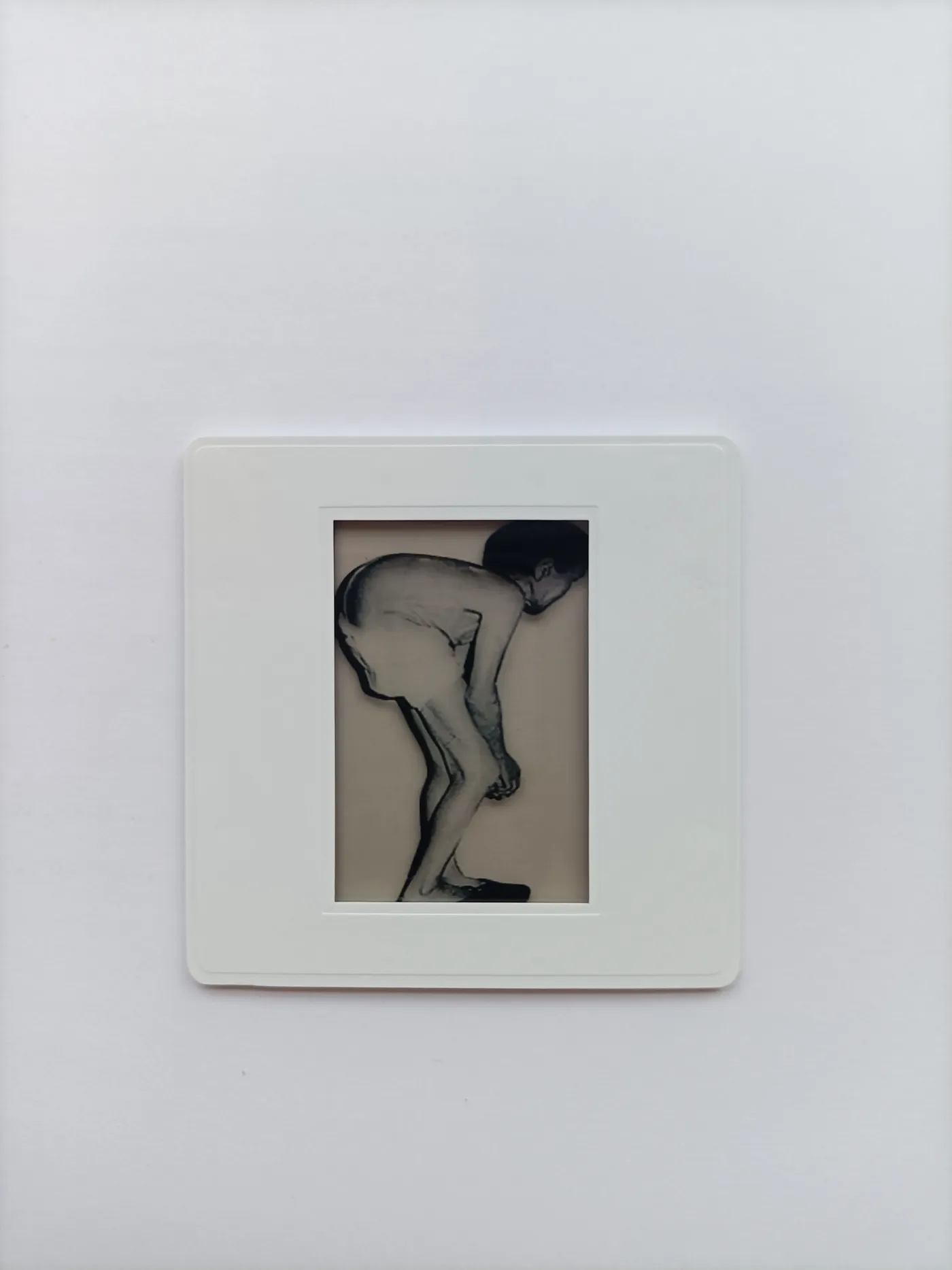
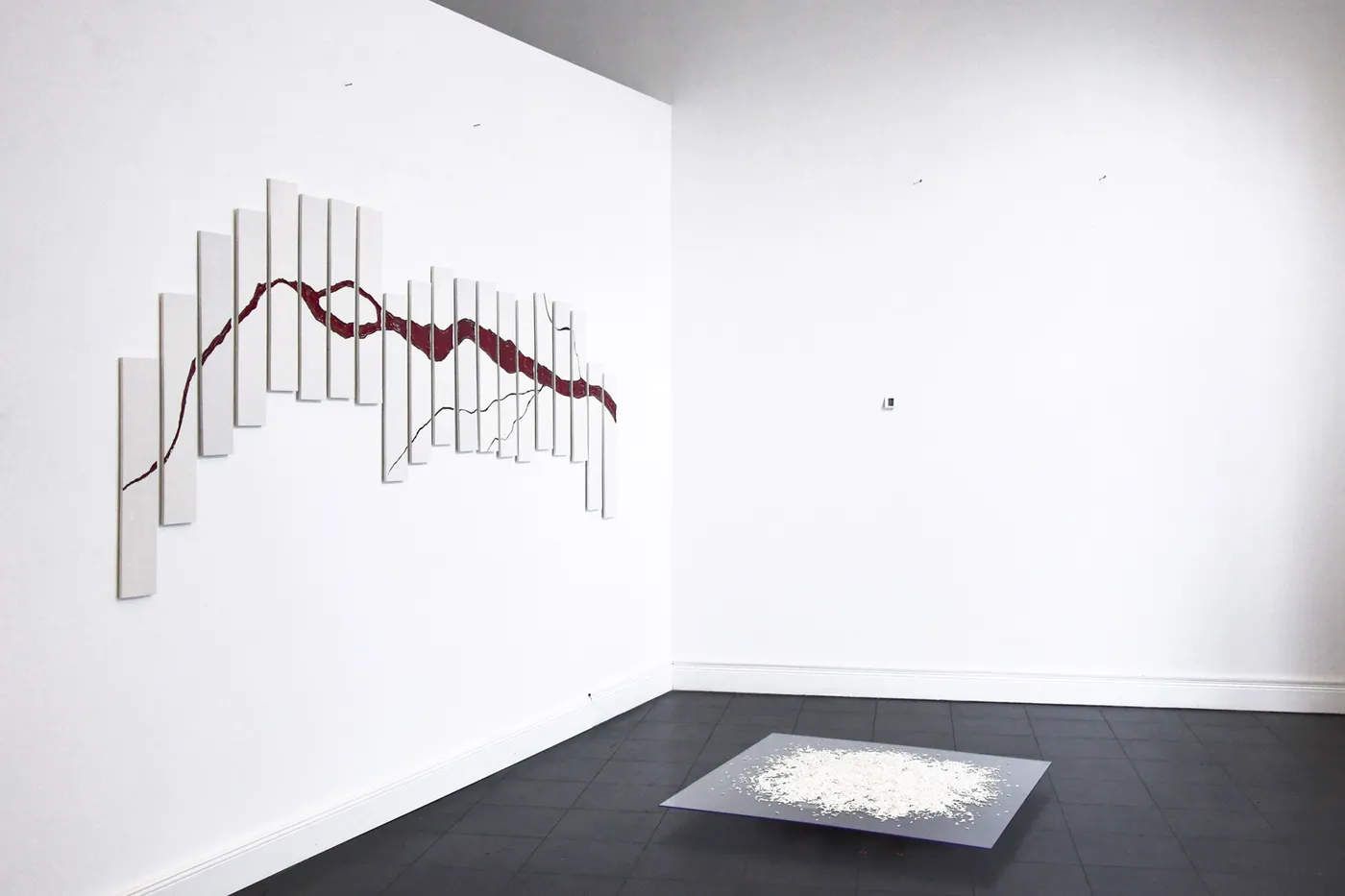
My installation consists of three fragments: a river course in ceramic cadmium on porcelain tiles, a rice mountain, and an X-ray image. Together, they tell the story of this disease.
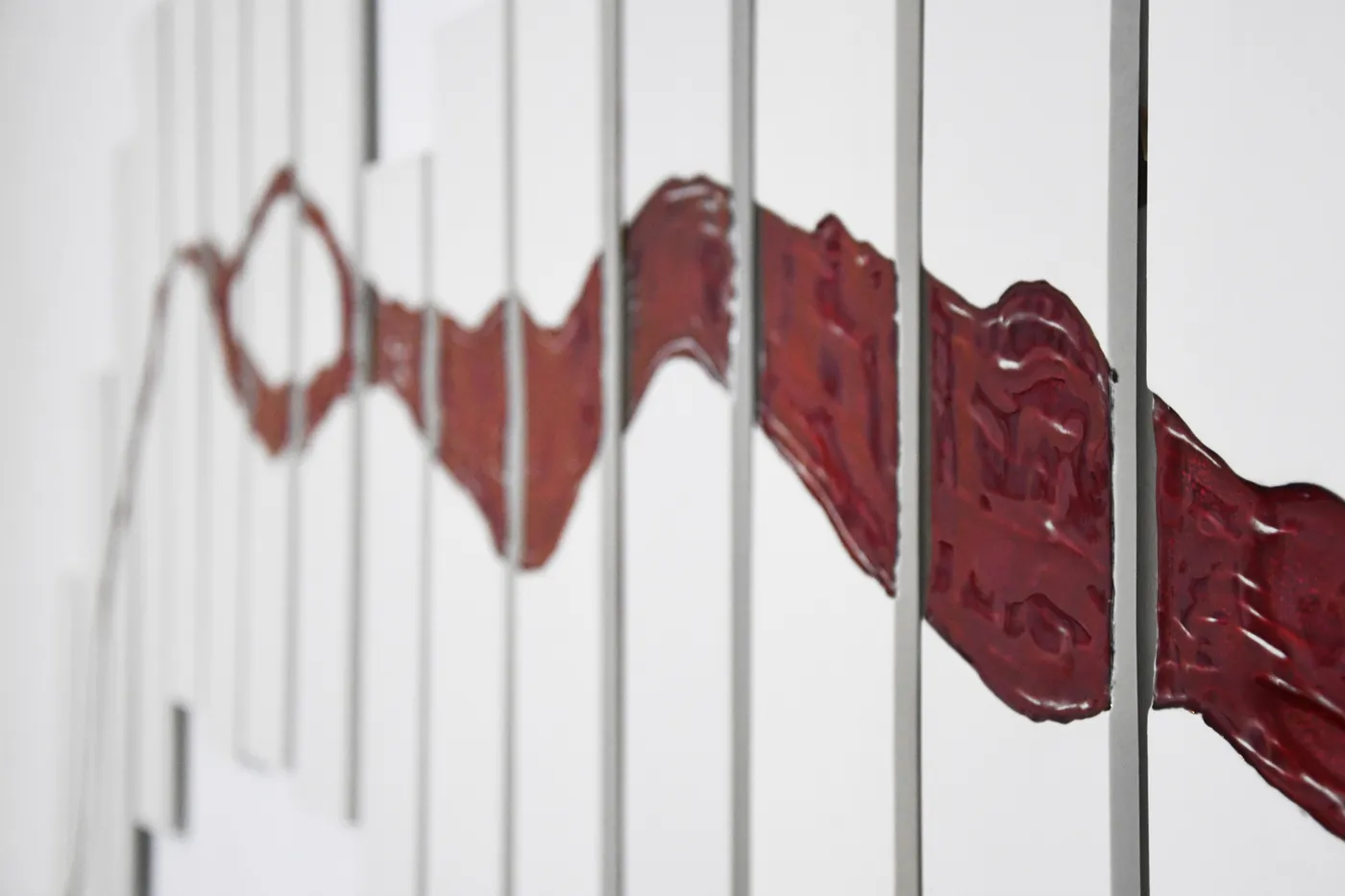
A wall relief shows the course of the Jinzu River across several ceramic tiles. Cadmium from the Tapioka mine entered the rice fields via the Jinzu River. The cadmium was then ingested by humans through the rice. The depiction of the river was taken from a historical hand drawing by Dr. Noboru Hagino (1968). Dr. Hagino was the physician who, in 1968, established the connection between his patients‘ symptoms and the nearby cadmium mine.
Over 100 people died and many suffered bone and liver damage. This is referenced by the slide on the wall, which shows the bone findings of one of Dr. Hagino‘s patients. The image is taken from his original report.
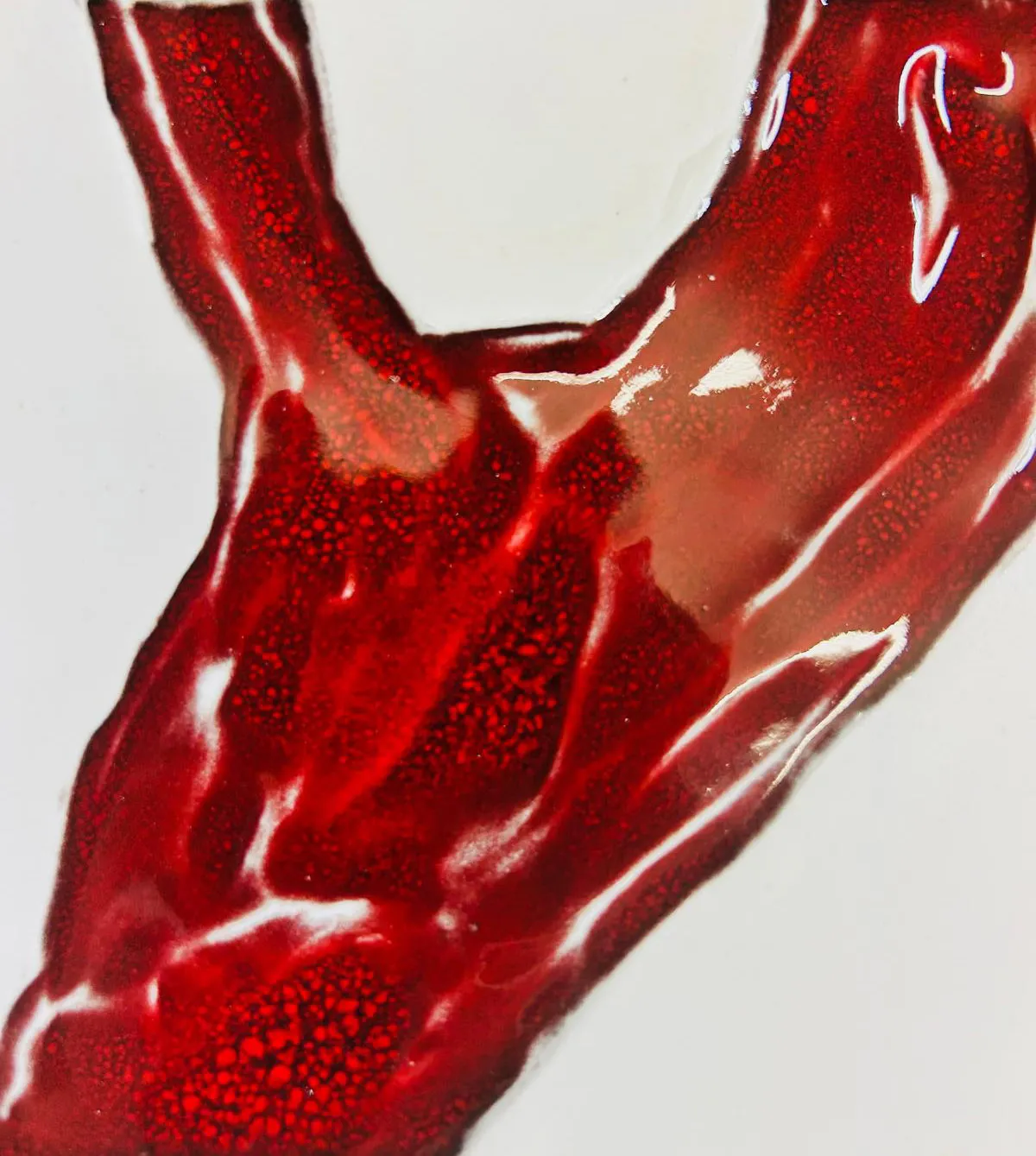
Cadmium, in combination with selenium, was the raw material that first made bright signal red tones possible in ceramics and is often associated with the beautiful color red. Between the 1950s and 1970s, countless floor and wall tiles were produced in cadmium red. Cadmium is now banned in industry.